
Back pain is one of the most common complaints in the modern world, turning simple acts like sitting or standing into a painful chore. Whether it's from hunching over a laptop, a weak core, or chronic stress, that constant, nagging ache can be debilitating. The good news is that for many types of non-acute back pain, relief can be found by gently moving your body.
Yoga for back pain is a science-backed, medically-recommended way to release tension, build support, and restore your spine to a healthy, happy state.
Yoga tackles back pain from two critical angles:
Stretching (Releasing Tension): Often, back pain isn't caused by the back itself, but by tight muscles elsewhere that are pulling on the spine. Tight hamstrings and tight hip flexors (from sitting all day) are the two biggest culprits. Yoga gently lengthens these muscles, releasing that "pull" on your lower back.
Strengthening (Building Support): Your spine wasn't designed to work alone. It needs a strong, supportive "girdle" of muscles around it. Yoga builds deep core strength—in your abdominals, obliques, and back muscles—which takes the load off your spinal discs and vertebrae.
Focus on slow, mindful movements. Never push into sharp pain.
Why: This is the #1 pose for spinal mobility. It gently warms up the entire back, bringing fresh blood flow and flexibility to the vertebrae.
How: Start on all fours (hands under shoulders, knees under hips). On an inhale, drop your belly, lift your tailbone, and look up ("Cow"). On an exhale, round your spine, tuck your chin to your chest, and press the floor away ("Cat"). Move with your breath for 10 rounds.
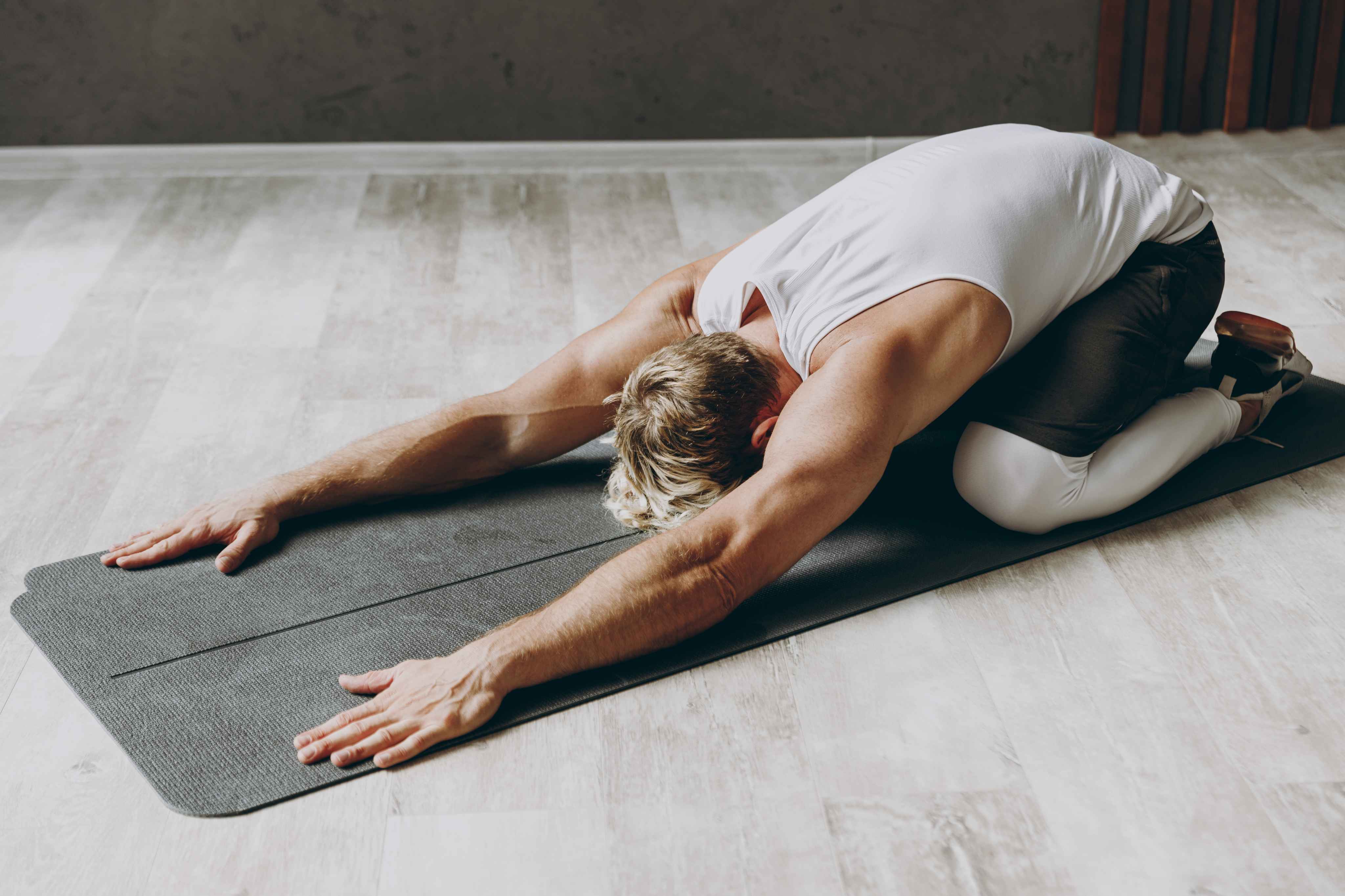
Why: This is a gentle, restorative pose that actively decompresses and lengthens the entire lower back.
How: From all fours, bring your big toes to touch and spread your knees as wide as your mat. Sink your hips back toward your heels and rest your forehead on the mat. Let your arms relax forward. Breathe deeply into your back.
Why: This pose gently "wrings out" the spine, releasing tension in the lower back and shoulders.
How: Lie on your back and pull your knees into your chest. Let your arms fall open to a "T" shape. On an exhale, let both knees gently fall to your right side. Turn your gaze to the left. Hold for 10 deep breaths. Repeat on the other side.
Why: We spend all day hunching forward which becomes a common cause for back pain. This is a very gentle backbend that counteracts that hunch, opening the chest and strengthening the upper back.
How: Lie on your stomach. Place your elbows directly under your shoulders and press your forearms into the mat. Gently lift your chest and head, keeping your hips on the floor. Hold for 5 breaths.
Why: This safely stretches the piriformis and glute muscles, which can get tight and contribute to sciatica and low-back pain.
How: Lie on your back with both knees bent. Cross your right ankle over your left knee, making a "figure four." Stay here, or for a deeper stretch, reach through and grab the back of your left thigh, gently pulling it toward you. Hold for 5-10 breaths. Repeat.
Why: This is a completely passive, restorative pose. It allows your lower back to relax fully into the floor and drains stagnant fluid from your legs.
How: Scoot your hips as close to a wall as possible. Swing your legs up the wall. Let your arms rest by your sides. Close your eyes and just breathe for 5-10 minutes.
Why: This variation targets the quadratus lumborum (QL), a deep lower-back muscle that is a common source of pain.
How: From Child's Pose, walk both of your hands over to the right side of your mat. You'll feel a deep stretch all along your left side-body and lower back. Hold for 5 breaths, then walk your hands to the left.
The key to relief with yoga exercises forback pain is consistency. You don't need a 60-minute class. Just 10 minutes of these gentle, mindful movements each day can make a world of difference. Listen to your body, move with kindness, and you will build a stronger, more resilient back.
An Important Note: Always consult with your doctor before starting any new exercise program for pain. This guide is for general, non-specific muscular back pain and stiffness. If you have a sharp, radiating, or acute pain, or a diagnosed condition like a herniated disc, please seek professional medical advice.

How to Build an Exercise Habit That Lasts Starting a new exercise routine is often the...
Read More
Desk Job? Simple Stretches to Counter Sitting All Day For many people, the workday...
Read More
The Basics of Strength Training for Beginners Strength training is sometimes seen as...
Read More
The Power of a Daily Walk: Small Steps, Big Benefits Of all the forms of exercise...
Read More