

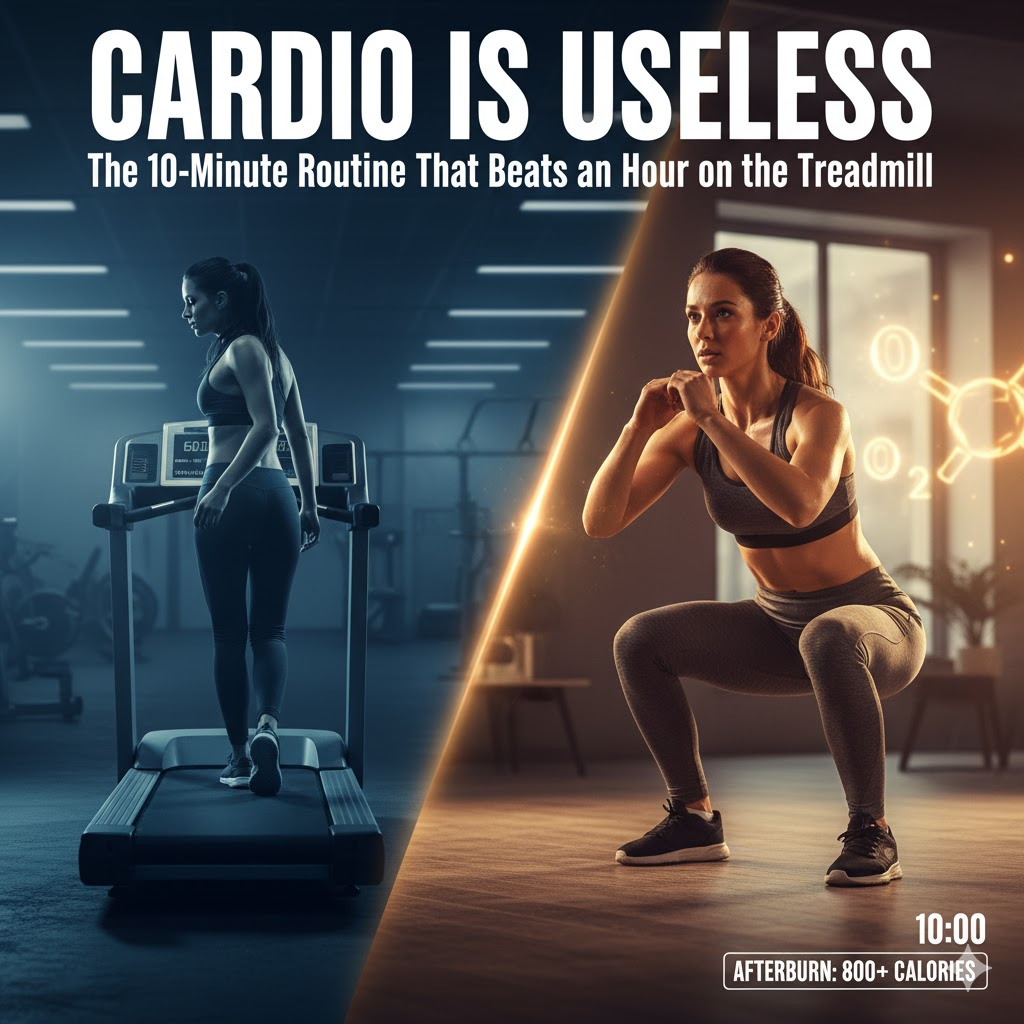
For too long, we have been slaves to the slow, steady drumbeat of the treadmill. We were told that the path to a healthy heart, a lean physique, and weight loss ran through endless miles of low-intensity, steady-state cardio (LISS). We sacrificed hours of our lives—sweating away on ellipticals, watching the clock tick from 0:00 to 60:00—believing that this monotonous endurance was the ultimate fitness sacrifice.
The truth, however, is that this kind of long-duration, moderate-effort cardio is often the least efficient tool in your fitness toolbox, particularly for busy individuals aiming for fat loss and genuine cardiovascular health improvement. Science has evolved, and the new story of fitness is about intensity, not duration. It’s about leveraging your body’s incredible metabolic machinery in short, powerful bursts.
Welcome to the era where 10 minutes of intelligent effort can genuinely deliver superior results to an hour of slogging it out on a machine.
Why is the commitment to traditional cardio so often met with frustratingly slow results?
When you burn 400 calories during an hour-long jog, your body does two immediate things to compensate. First, it spikes your appetite, often leading you to consume more than those 400 calories back without realizing it ("I earned this cookie!"). Second, and more subtly, it downregulates your Non-Exercise Activity Thermogenesis (NEAT)—the energy you burn simply being active throughout the rest of the day (fidgeting, standing, walking around). You leave the gym tired and spend the next three hours sedentary on the sofa, effectively canceling out your caloric burn.
LISS cardio trains your body to be efficient at endurance, which is great for marathon runners, but detrimental for fat loss. Your body becomes a calorie-sparing machine, adapting to the low effort by becoming more energy-efficient and, ironically, slowing down your metabolism over time.
The biggest failing of steady-state cardio is its minimal Excess Post-exercise Oxygen Consumption (EPOC), also known as the "afterburn." When you exercise at a low to moderate intensity, your metabolism returns to normal soon after you stop. The most potent form of exercise works not only during the session but for hours afterward.
The 10-minute routine that dethrones the treadmill is built on the scientifically validated power of High-Intensity Interval Training (HIIT). HIIT is a training technique where you give all-out, maximum effort through quick, intense bursts of exercise, followed by short, sometimes active, recovery periods.
Maximum EPOC: HIIT forces your body into an oxygen debt. To recover and bring your body back to homeostasis, your metabolism stays elevated for up to 24 hours post-workout, continuing to burn calories—often targeting fat stores—long after you’ve finished. This is the afterburn effect.
Time Efficiency: By working at 80% to 95% of your maximum heart rate during the work intervals, you achieve cardiovascular and metabolic benefits that would take three to five times longer to achieve with moderate effort.
Visceral Fat Targeting: Research consistently shows that HIIT is especially effective at reducing visceral fat—the dangerous fat stored around your organs—which is a key marker for cardiometabolic health.
Muscle Preservation: Unlike long-duration cardio which can sometimes catabolize muscle tissue, HIIT, especially when combined with bodyweight strength movements, helps maintain or even build lean muscle mass, further boosting your resting metabolism.
This is a versatile, no-equipment-needed routine that you can execute anywhere—in a hotel room, a park, or your living room. The key is to commit to maximum effort during the work periods. You should be breathless and unable to hold a conversation.
Circuit 2 (Repeat 2 times):
While this routine requires minimal equipment, a few accessories can enhance your workout, track your progress, and improve your comfort.
The narrative of fitness is no longer about grinding out volume; it's about engineering maximum effort in minimal time. By trading your hour of mindless jogging for 10 minutes of intense, intelligent work, you reclaim your time, boost your metabolism, and unlock a far more efficient path to genuine cardiovascular strength.
Medically Reviewed By:
Dr. Andrew Collins, MD
Board-Certified Sports Medicine Physician
Fellow, American College of Sports Medicine (ACSM)
Review Date: March 2025
Medical Accuracy Notes:
This article reflects current evidence on cardiovascular exercise, metabolic adaptation, and high-intensity interval training. Individual responses vary based on age, fitness level, and medical history. Consult a healthcare professional before beginning a new exercise program, especially if you have cardiovascular, metabolic, or orthopedic conditions.
Written by:
Jordan Hale, MS, CSCS
Exercise Physiologist & Certified Strength and Conditioning Specialist
Jordan specializes in evidence-based training strategies, metabolic health, and sustainable fitness for busy adults. His work focuses on translating complex exercise science into practical, real-world guidance.

How to Build an Exercise Habit That Lasts Starting a new exercise routine is often the...
Read More
Desk Job? Simple Stretches to Counter Sitting All Day For many people, the workday...
Read More
The Basics of Strength Training for Beginners Strength training is sometimes seen as...
Read More
The Power of a Daily Walk: Small Steps, Big Benefits Of all the forms of exercise...
Read More